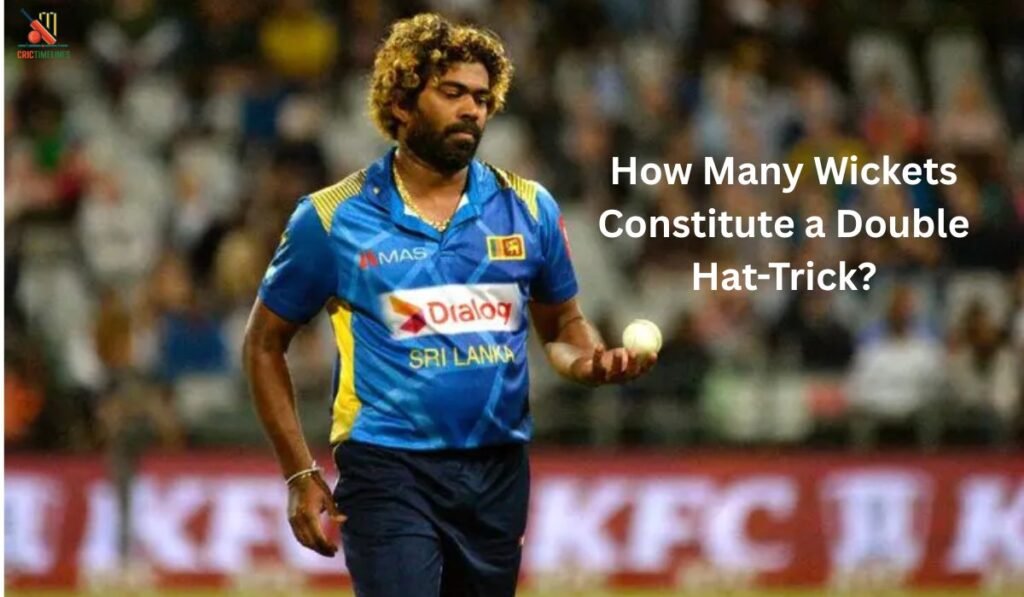
Cricket has always been about the rare and the dramatic, and in bowling there are few things more dramatic or rarer than a double hat-trick. And such a framing every time a bowler runs through the opposition in three or four balls means fans now ask only one question: How many wickets constitute a double Hat-Trick?
The answer is easy, but what it takes to accomplish this height of success is the rarest of the rare. This guide demystifies the rule in plain English, explains how it functions and why this moment is so significant in cricket history.
How Many Wickets Constitute a Double Hat-Trick?
In cricket, a double hat-trick is two consecutive wickets off successive balls by the bowler in the same match.
Only the wickets taken by a bowler enter this sequence. The sequence ends if there is any break – a run-out, a wide or a no-ball.
What Is a Double Hat-Trick in Cricket?
The double hat-trick is also an extension of a conventional hat-trick and it is related, in that it means taking four wickets instead of three in consecutive deliveries; but these are even rarer. And when consecutive three wickets in three balls are taken, it is termed as hat-tricks.
To do this, the bowler must:
- Bowl four legitimate deliveries in succession.
- Take one wicket on each ball
- Keep the sequence uninterrupted
- Do it in the same innings
This additional delivery renders the task much more difficult to achieve, and as such a double hat-trick is one of the rarest feats in bowling.
Hat-Trick vs Double Hat-Trick: Key Difference
| Feat | Wickets | Balls |
| Hat-trick | 3 | 3 consecutive legal balls |
| Double hat-trick | 4 | 4 consecutive legal balls |
Simple Ball-by-Ball Example
Regular Hat-Trick (3 in 3
- Ball 1: Bowled
- Ball 2: LBW
- Ball 3: Caught
Double Hat-Trick (4 in 4)
- Ball 1: Bowled
- Ball 2: Caught
- Ball 3: LBW
- Ball 4: Bowled
All four dismissals must happen without interruption and must be credited to the same bowler.
What Counts as a Legal Delivery?
Only legal deliveries can form a double hat-trick sequence.
Legal Deliveries Include:
- Any ball that is not a wide or a no-ball
Deliveries That Do NOT Count:
- Wides
- No-balls
If a wicket falls on a no-ball (such as a run-out), it does not count toward a double hat-trick.
Types of Dismissals That Count
The following dismissals can be part of a double hat-trick:
- Bowled
- LBW
- Caught
- Caught and bowled
- Stumped
- Hit wicket
Dismissals That Do Not Count:
- Run-outs (because the wicket is not credited to the bowler)
A single run-out anywhere in the sequence breaks the chain.
Can a Double Hat-Trick Span Overs or Innings?
- Can span overs:
Two wickets at the end of one over and two at the start of the next still count. - Cannot cross innings:
A new innings resets all sequences, even if the same bowler starts bowling again.
Is a Double Hat-Trick an Official Cricket Term?
It is worth noting that “double hat-trick” is in no way defined by the MCC Laws of Cricket. It is an unofficial term commonly accepted and used by players, scorers, writers, and fans.
Wickets are recorded in scorebooks in the standard manner. There is no special symbol to show that somebody has taken six wickets.
Why Is a Double Hat-Trick So Rare?
Socking away four wickets in four balls requires something more than skill. Several factors must align perfectly.
Key Reasons for Its Rarity:
- Extreme pressure on the bowler
- New batsmen coming and going again and again
- A defender’s shot, or a lucky edge, can terminate the streak.
- Batters often go into their shell after a hat-trick ball
That even an elite bowler may get very near but be struck down on the fourth delivery.
Format-Wise Chances of a Double Hat-Trick
Test Cricket
The slow pace and defensive mindset of batters make this feat extremely unlikely. Only near-misses exist.
One-Day Internationals
Batters take more risks, increasing the chance slightly. However, only one confirmed international case exists.
T20 and T20I Cricket
The short format offers the highest probability. Aggressive batting, pressure overs, and frequent wickets make four-in-four more achievable.
Common Myths About Double Hat-Tricks
Myth 1: A Double Hat-Trick Means Six Wickets
Truth: It means four wickets in four balls.
Myth 2: Run-Outs Count
Truth: Run-outs do not count because the wicket is not credited to the bowler.
Myth 3: It Must Happen in One Over
Truth: It can span across two overs.
Myth 4: It Is an Official ICC Category
Truth: It is a popular cricket term, not an official law.
Full List of International Instances
International Double Hat-Tricks (Four Wickets in Four Balls)
| Year | Bowler | Country | Format | Opponent |
|---|---|---|---|---|
| 2007 | Lasith Malinga | Sri Lanka | ODI | South Africa |
| 2019 | Rashid Khan | Afghanistan | T20I | Ireland |
| 2021 | Curtis Campher | Ireland | T20I | Netherlands |
| 2022 | Jason Holder | West Indies | T20I | England |
| 2024 | Waseem Yaqoob | Lesotho | T20I | Mali |
| 2024 | Hernan Fennell | Argentina | T20I | Cayman Islands |
- Lasith Malinga (2007): The first-ever international double hat-trick, achieved during the Cricket World Cup.
- Rashid Khan (2019): A devastating spell that changed the match momentum instantly.
- Curtis Campher (2021): A historic T20 World Cup moment for Ireland.
- Jason Holder (2022): A match-winning final over against England.
- Waseem Yaqoob (2024): A dominant performance in an ICC Africa qualifier.
- Hernan Fennell (2024): The most recent addition, achieved in an ICC Americas qualifier.
Why Fans Love Double Hat-Tricks
Double hat-tricks create instant drama. A match can flip completely in only four balls. We remember them because they occur in a matter of seconds, surprise everyone and often impact the outcome of the game.
This tradition might have put together local and gully cricket stars with cricketers plying their trade in Isthmustown.
Conclusion
So then, what is a double hat-trick in terms of wickets?
The unambiguous and proper answer is four wickets by the same bowler off consecutive legal deliveries in a single match.
This sort of rather unusual spectacle in bowling is the epitome of precision, self-belief and control under pressure. Many a bowler aspires to it but very few actually get to write their name in this rare page of cricket history.
FAQs
1. How many wickets are required for a double hat-trick?
Four wickets in four consecutive legal balls.
2. Can a run-out be part of a double hat-trick?
No, run-outs do not count.
3. Can it span two overs?
Yes, as long as the deliveries are consecutive.
4. Is a double hat-trick official in cricket laws?
No, it is an informal but widely accepted term.
5. Which format offers the best chance for a double hat-trick?
T20 cricket offers the highest chance due to aggressive batting.
- Joe Root Total Centuries
- ICC Men’s T20 World Cup 2026 Full Schedule
- Lucknow Super Giants vs Royal Challengers Bengaluru Standings
- England Women’s National Cricket Team vs India Women’s National Cricket Team Timeline
- Ishan Kishan Jersey Number
Related Posts
Women’s Asia Cup 2026 Schedule, Teams & Full Squads
The Women's Asia Cup 2026 is the 10th time that…

The Evolution of Sports Engagement: From Stadiums to Digital Platforms
Sports have always been a powerful force in bringing people…

Flat Betting vs Variable Betting in IPL: Which Strategy is Safer & More Profitable?
The Indian Premier League (IPL) is one of the most…