
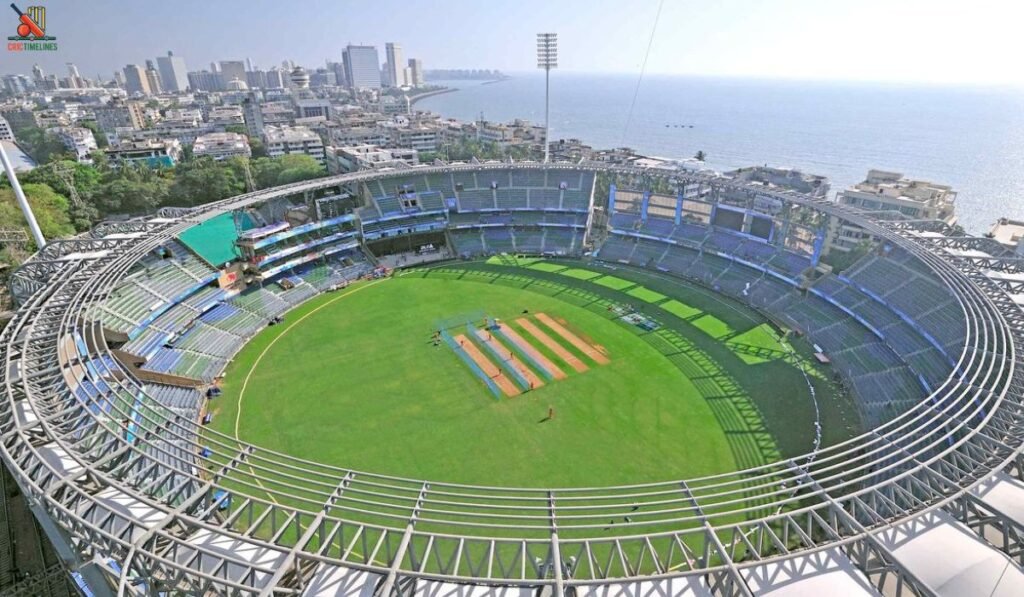
Mumbai’s Wankhede Stadium is among the most iconic cricketing grounds across the globe. Lying in proximity to the Arabian Sea, the stadium is renowned for its buzzing atmosphere, run-friendly surface and classic matches in all formats. From being the venue of 2011 ODI World Cup final which no one will forget, to having achieved ongoing record breaking IPL matches Wankhede has witnessed some high-quality cricket. Short boundaries, even bounce and heavy sea breeze make the ground a hit with both batters as well as the fast bowlers, and cricket lovers in general.
An Overview of the Wankhede Stadium
| Particulars | Details |
| Stadium Name | Wankhede Stadium |
| Location | Mumbai, Maharashtra, India |
| Established | 1974 |
| Owner | Mumbai Cricket Association |
| Seating Capacity | Approx. 33,000 |
| Boundary Length | 73-75 meters |
| Home Team | Mumbai Indians (IPL), India |
| Pitch Type | Grass surface |
| Ends | Garware Pavilion End, Tata End |
| Floodlights | Yes |
| Notable Match | 2011 ODI World Cup Final |
Wankhede Stadium Location & Map
Wankhede Stadium Pitch Report & Pitch Behavior
The Wankhede is one of the marquee batting surfaces in India. It gives even bounce and good pace, allowing the batsmen to play their strokes comfortably. The red-soil base means the ball sits up quite well in limited-overs cricket, particularly.
Pacers receive the early help on, including in the first few overs, from swing provided by the sea breeze. Run-scoring becomes more comfortable as the pitch wears on. It can break up a little on day four and five of Test matches, allowing spinners to feature, but it never becomes crazily broken.
Dew is a significant factor in night matches. Sides chasing often gain an advantage as the wet ball makes it tough for bowlers to grip. Wankhede in general is associated with high scoring games, fast outfields and nail biting last over finishes.
Wankhede Stadium Capacity
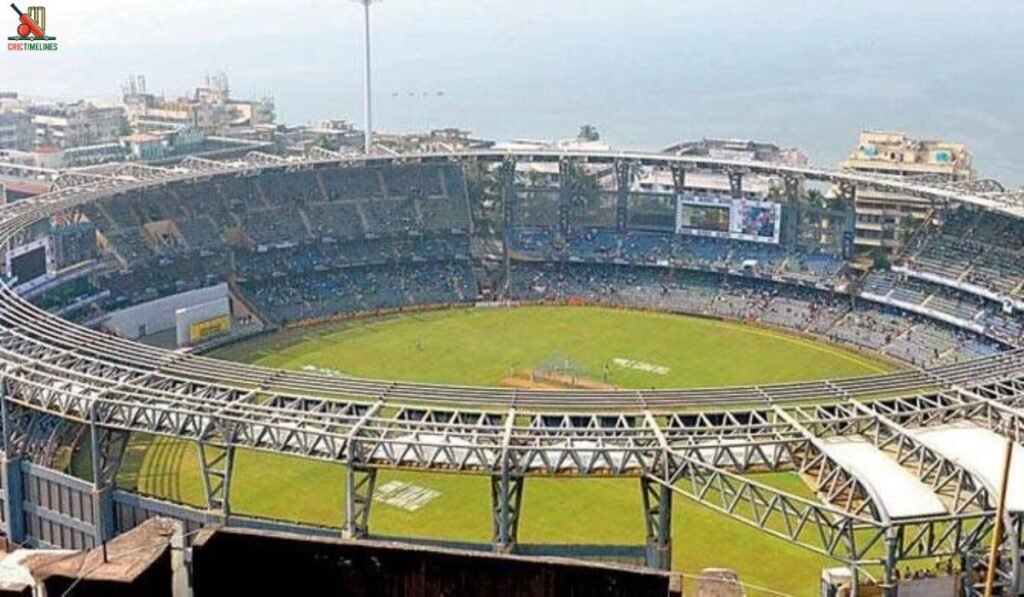
Wankhede Stadium has a capacity of approximately 33,000 now. In the past, more fans could fit in the stadium but renovation work before the 2011 World Cup brought it fully into the modern age with an increase in seating comfort and facilities for players and spectators. “In comparison with bigger arenas we have lower capacities but the smaller design means an electric experience when games are being played will be enjoyed.
Wankhede Stadium Weather
- Summer (March–May): Hot and humid, temperatures between 28°C and 35°C
- Monsoon (June–September): Heavy rainfall, limited cricket activity
- Winter (November–February): Pleasant conditions, temperatures between 19°C and 30°C
Wankhede Stadium ICC Men’s T20 World Cup Records
| Record Type | Details |
| Matches Played | 6 |
| Highest Team Total | 218/4 |
| Lowest Team Total | 139/7 |
| Highest Successful Chase | 206/4 |
| Average First Innings Score | 185 |
| Matches Won Batting First | 2 |
| Matches Won Batting Second | 4 |
| Highest Individual Score | 101* |
| Best Bowling Figures | 4/26 |
Team Performance at Wankhede – ICC Men’s T20 World Cup
| Team | Matches Played | Wins | Losses |
| India | 3 | 2 | 1 |
| England | 2 | 2 | 0 |
| South Africa | 1 | 1 | 0 |
| Sri Lanka | 1 | 0 | 1 |
| Australia | 1 | 0 | 1 |
Wankhede Stadium Records & Stats
International Records at Wankhede Stadium
| Format | Highest Team Score | Lowest Team Score | Top Run-Scorer | Top Wicket-Taker |
| Test | 631 all out | 62 all out | Sunil Gavaskar | Ravichandran Ashwin |
| ODI | 438/4 | 55 all out | Virat Kohli | Mohammed Shami |
| T20I | 246/9 | 135/7 | Virat Kohli | – |
Wankhede Stadium IPL Records
| Category | IPL Record |
| Matches Played | 120+ |
| Matches Won Batting First | 55 |
| Matches Won Batting Second | 65 |
| Highest Team Total | 235/1 |
| Lowest Team Total | 67 all out |
| Highest Individual Score | 133* |
| Most Runs at Venue | Rohit Sharma |
| Most Wickets at Venue | Lasith Malinga |
Wankhede Stadium Boundary Length
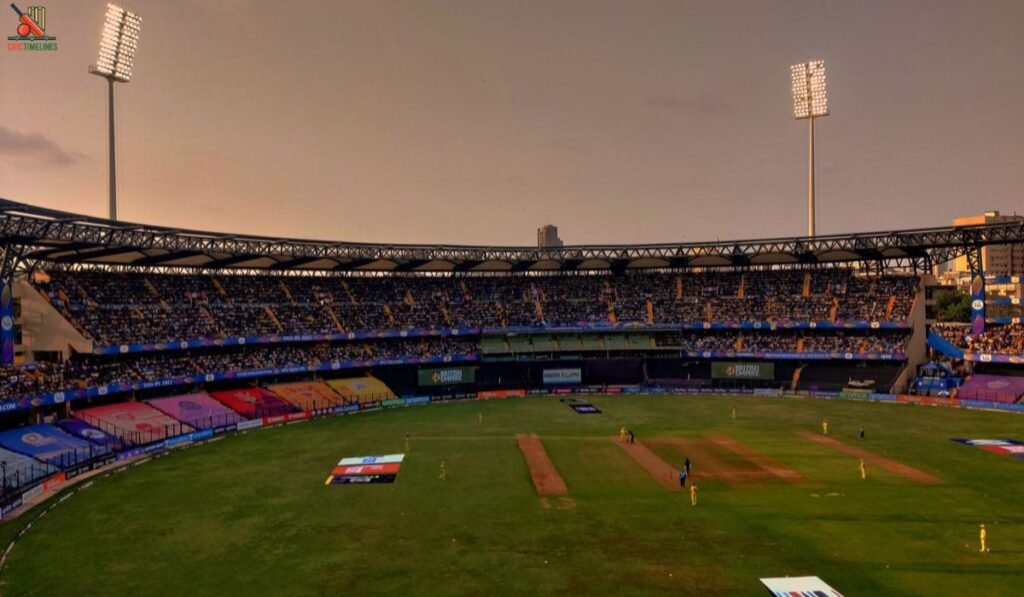
| Boundary Area | Approx. Distance |
| Straight Boundary | 73-75 meters |
| Square Boundary | 63-65 meters |
| Deep Extra Cover | 74 meters |
| Cow Corner | 74 meters |
| Third Man | 55-58 meters |
| Fine Leg | 55-58 meters |
FAQs – Wankhede Stadium Mumbai
1. What is the Wankhede Stadium pitch report?
Ans: The Wankhede Stadium pitch report suggests a batting-friendly surface with good bounce, early swing for pacers, and high-scoring matches.
2. What is the Wankhede Stadium boundary length?
Ans: The Wankhede Stadium boundary length ranges between 55 meters to 75 meters, making it ideal for big hitters.
3. What is the Wankhede Stadium capacity?
Ans: The Wankhede Stadium capacity is approximately 33,000 spectators.
4. Is Wankhede Stadium good for batting?
Ans: Yes, Wankhede Stadium is considered one of the best batting wickets in India, especially for limited-overs cricket.
5. What is the average score at Wankhede Stadium in T20 matches?
Ans: The average T20 first-innings score at Wankhede Stadium is around 180 runs.
6. How does Wankhede Stadium weather affect matches?
Ans: Wankhede Stadium weather is usually humid, and dew during night matches helps teams batting second.
7. What are the Wankhede Stadium IPL records?
Ans: Wankhede Stadium IPL records include a highest team total of 235/1 and a strong advantage for chasing teams.
8. What is India’s record at Wankhede Stadium Mumbai?
Ans: India’s record at Wankhede Stadium Mumbai is impressive across Tests, ODIs, and T20Is.
9. What are the Wankhede Stadium ICC Men’s T20 World Cup records?
Wankhede Stadium ICC Men’s T20 World Cup records show high-scoring games, with chasing teams winning most matches.
10. Who has scored the most runs at Wankhede Stadium?
Ans: Rohit Sharma has scored the most runs at Wankhede Stadium in IPL matches.
Related Posts
R. Premadasa Stadium Colombo: A Complete Guide to History, Pitch, Weather & ODI Legacy
R. Premadasa Stadium Colombo Situated on the western island of…